How to get a Romanian passport by descent, step by step
Prepared by the lawyers of the practice, which handles citizenship-by-descent cases (Legea 21/1991), including representation before the National Authority for Citizenship and the courts in Bucharest.
Reviewed by the practice's attorney, member of the Bucharest Bar (Baroul București) ·
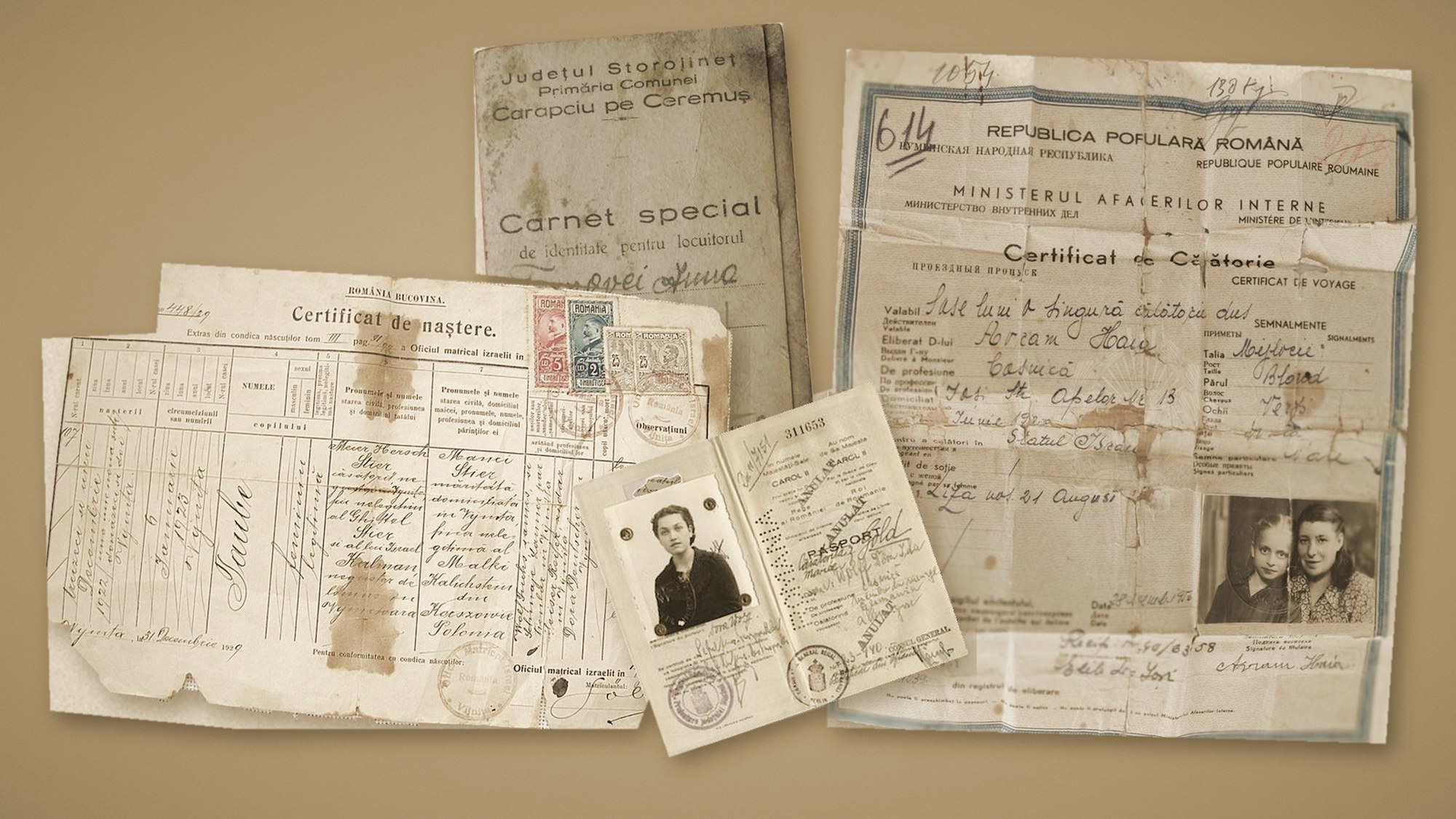
A Romanian passport can only be issued to a Romanian citizen. For descendants of Romanian citizens, getting one therefore happens in two stages. The first is citizenship: you reacquire the Romanian citizenship your family once held, under Article 10 or Article 11 of Law 21/1991. The second is the passport itself, which you apply for once you have taken the citizenship oath. The first stage takes several years, mostly because of the documents and the time the authority needs to decide. The second usually takes a few weeks and a single appointment, provided the paperwork is prepared in advance.
You will often see the phrase “Romanian passport by descent”. It is a natural way to describe the goal, but it helps to know that there is no separate passport procedure for descendants. What is granted by descent is citizenship, and the passport is the document every citizen is entitled to.
To make the steps easier to follow, this article uses one example throughout. Imagine Sarah, who lives in Chicago. Her great-grandmother was born in 1925 in Cernăuți — today Chernivtsi in Ukraine, which belonged to Romania between the two world wars — and emigrated to the United States after the war. Sarah has a US passport and would like a Romanian one as well.
What a Romanian passport gives you
A Romanian passport is an EU passport. It gives you the right to live, work, study or retire in any of the 27 EU countries, as well as Norway, Iceland, Liechtenstein and Switzerland, with no visa, work permit or residence permit to apply for. For an American family, that could mean taking a job in Dublin, sending a child to university in the Netherlands at EU student rates, or spending retirement in Portugal.
You keep your US citizenship, because Romania allows dual citizenship. And the right carries on to the next generation: a child with at least one Romanian parent is a Romanian citizen too.
Romania has been a full member of the Schengen Area since January 1, 2025. In January 2026, the Henley Passport Index ranked the Romanian passport 11th in the world, with visa-free access to 178 destinations. One exception is worth knowing: Romania isn’t part of the US Visa Waiver Program, so relatives who hold only a Romanian passport still need a visa to visit the US.
Who can get one
Only Romanian citizens can hold a Romanian passport. If your parents, grandparents or great-grandparents were born in Romania, including the regions that belonged to Romania between 1918 and 1940 (Bessarabia, most of today’s Moldova; Northern Bukovina; and the southern Odesa region), you may be able to reclaim Romanian citizenship by descent. Your family’s ethnic background doesn’t matter. What matters is whether your ancestor was a Romanian citizen. The next section explains who qualifies, and our guide Was my grandparent a Romanian citizen? walks you through it by date and place of birth.
If you don’t have your ancestor’s records, or you’re not sure where they were born, the first step is usually an archive search for their birth record. Here’s how ancestor records from Ukraine and Moldova are found.
Who can get a Romanian passport by descent
Romanian law allows the descendants of former Romanian citizens to reacquire citizenship (redobândirea cetățeniei române). Which article applies depends on how the ancestor lost their citizenship and on how many generations separate you from them:
- Article 11 applies when the ancestor lost Romanian citizenship involuntarily or had it taken away. It reaches children, grandchildren and great-grandchildren. Most families whose ancestors lived in Bessarabia, Northern Bukovina or Southern Dobruja fall under this article, because these territories passed to other states and their inhabitants lost Romanian citizenship without choosing to.
- Article 10 applies to anyone who lost Romanian citizenship for any reason, including by their own choice. It reaches children and grandchildren.
Sarah’s great-grandmother lost her citizenship when Northern Bukovina was annexed in 1940. Sarah is a great-grandchild, so her route is Article 11.
What matters is whether the ancestor was a Romanian citizen, not their ethnicity or the language they spoke. If you are not sure which article fits your family, Article 10 or Article 11 explains the difference in detail, and was your grandparent a Romanian citizen shows how to tell from a date and place of birth. Some people discover that they are already Romanian citizens without knowing it; you may already be a Romanian citizen explains when that happens.
You do not have to give up your current nationality. Romania allows dual citizenship, so Sarah keeps her US passport, just as a British, Canadian, Australian or Israeli applicant would keep theirs.
Stage one: becoming a Romanian citizen
The citizenship application is the longest part of the process, and everything that follows depends on it. It moves through five steps.
1. Preparing the file. The file proves the line from your ancestor to you. It contains the birth and marriage certificates for each generation, a criminal record certificate, and, since 15 March 2025, a Romanian language certificate at level B1, which Law 14/2025 introduced. Applicants who are 65 or older when they apply, and former citizens themselves, are exempt from the language requirement; descendants applying in their own right are not. The B1 requirement and its deadline explains who needs the certificate and by when.
For most families, the certificates are the hardest part. The records of an ancestor born in Bessarabia or Bukovina are usually held today by civil registries and archives in Ukraine, Moldova or Romania, and a family abroad rarely has them. Birth certificates from Ukraine, Moldova, Russia, Kazakhstan and Romania describes what can be obtained and how.
2. Submitting the application. The application is submitted in person, either at the National Citizenship Authority (ANC) in Romania or at the Romanian consulate in the country where you live. In person in Romania or at a consulate compares the two options.
3. Waiting for the decision. According to official ANC data from June 2025, applications under Article 11 took an average of 3.28 years to reach a decision, and applications under Article 10 took 1.63 years. In practice, Article 11 applications are currently taking four to six years. If the ANC asks for additional documents during this time, you have four months to provide them.
4. Taking the oath. When the application is approved, the ANC issues an order granting citizenship. You then have one year from the date you are notified of the order to take the oath of allegiance (Article 20 of Law 21/1991, as amended by Law 14/2025). The deadline matters: if it passes without the oath, the order stops having effect. Applicants who live abroad can take the oath before the head of the Romanian consulate in their country.
5. Receiving the citizenship card. After the oath you receive a temporary certificate and then a citizenship card. From this point you are a Romanian citizen, and you can apply for a passport.
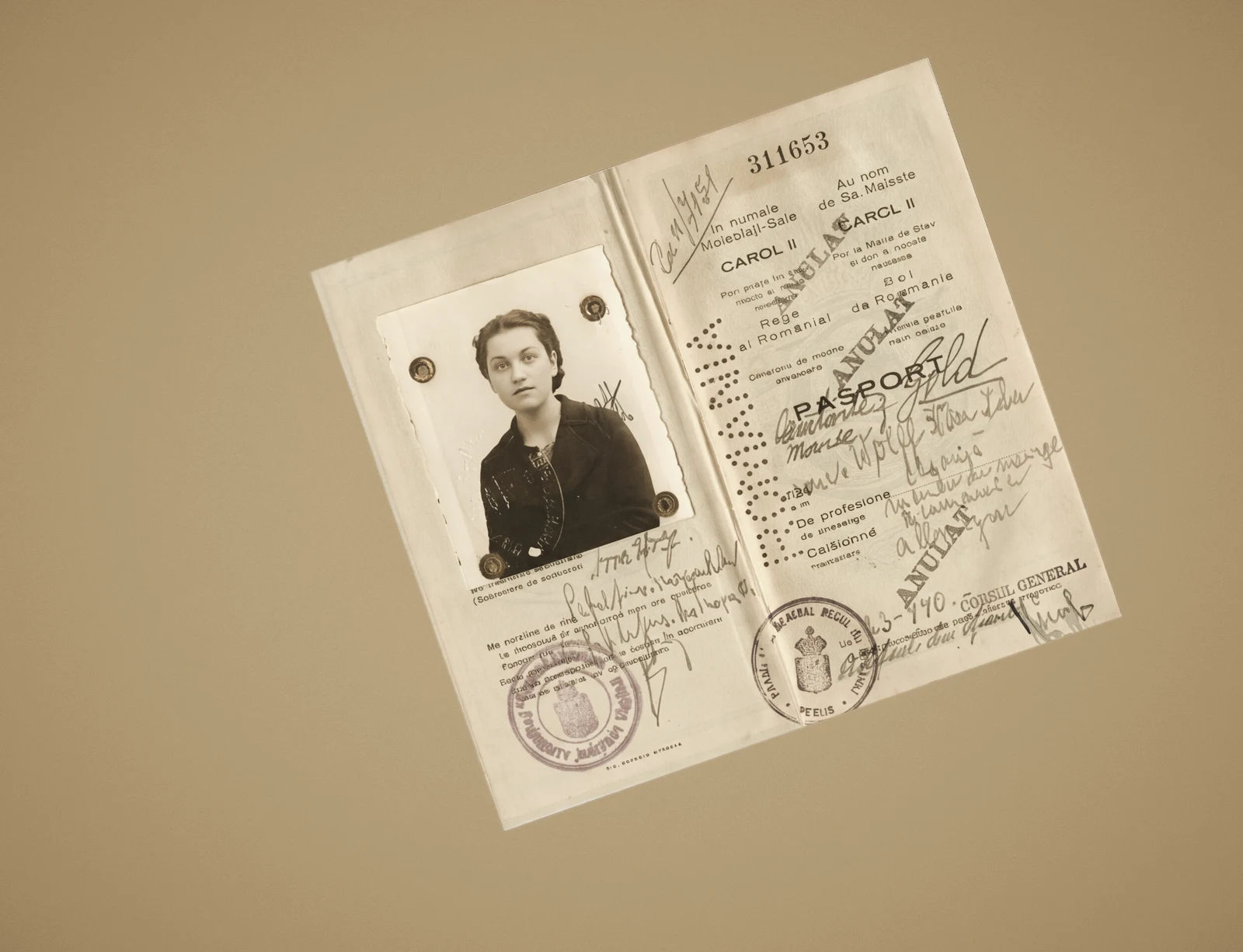
Stage two: applying for the Romanian passport
Before booking the passport appointment, three things need to be in place. Each of them exists for a practical reason, so it is worth understanding what they are for.
1. Registering your birth certificate in Romania
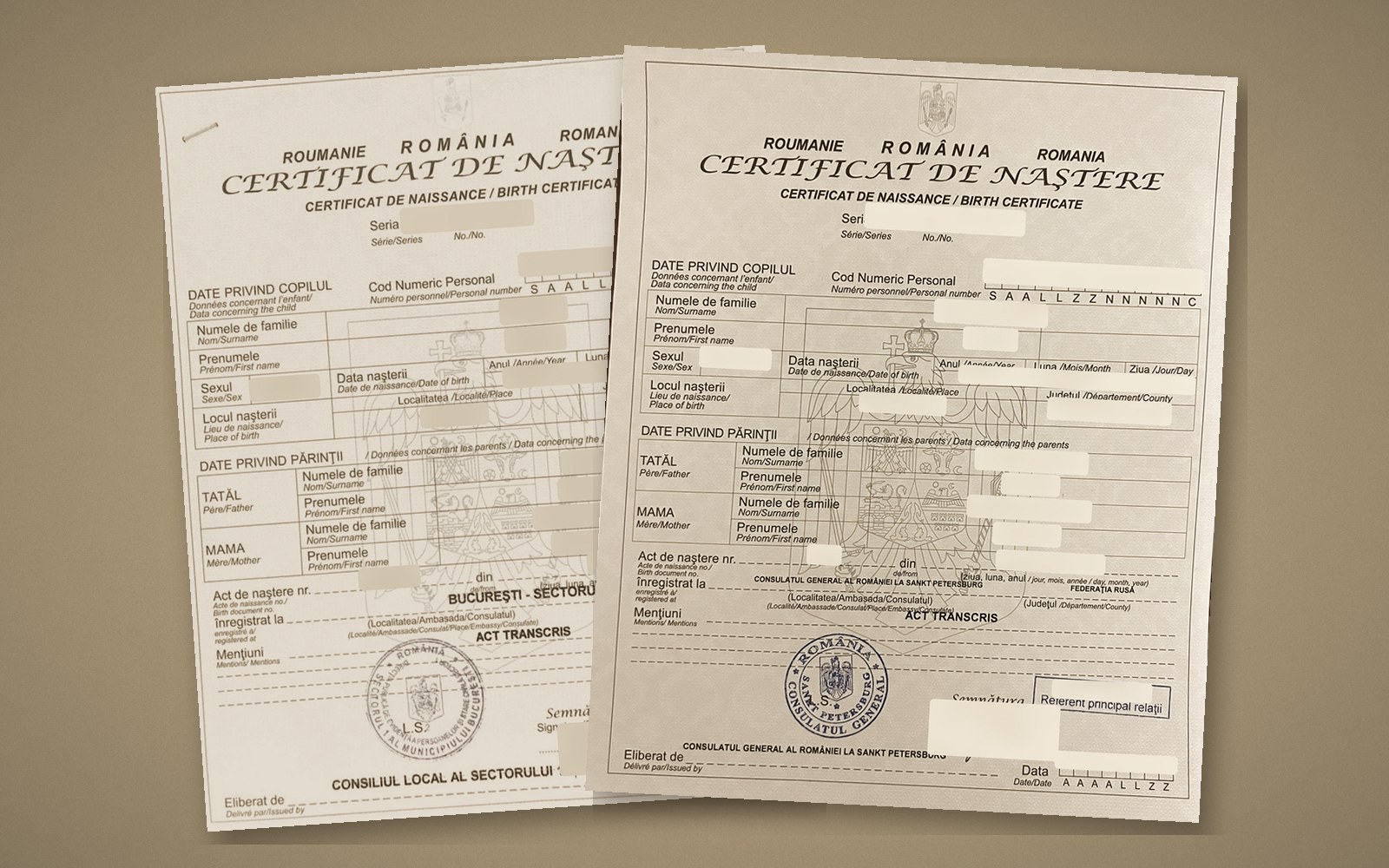
The Romanian passport service works only with Romanian civil records. A US, British or Israeli birth certificate is therefore not enough on its own: it first has to be entered in the Romanian civil register. This procedure is called transcription (transcriere). Once it is done, you receive a Romanian birth certificate and a Romanian personal identification number, and the passport service can issue you a passport. If you are married, your marriage certificate is transcribed in the same way.
For citizens living abroad, transcription is handled by default by the civil status office of Bucharest’s Sector 1, and it can also be requested through a Romanian consulate. The office’s own processing time is 30 to 90 days. When the request is made through a representative in Bucharest, it is sensible to allow about three and a half months. There is no state fee; only the application form is paid for.
2. Deciding which address goes into the passport
A Romanian passport records where its holder lives. If you live outside Romania, as Sarah does, you receive a passport for citizens domiciled abroad, known in Romanian by the abbreviation CRDS. To obtain it, you show that you have the right to live in your country of residence. For Sarah, her US passport serves that purpose; for others it may be a residence permit or a foreign passport. The document is presented in the original, together with an authorised Romanian translation.
If you live in Romania, the order is different: you first obtain a Romanian identity card (carte de identitate) with your Romanian address, and then apply for the passport.
3. Gathering the documents
For a citizen living abroad, the Romanian passport service asks for:
- the citizenship card or certificate, which is required from everyone who obtained or reacquired citizenship;
- the Romanian civil status certificates issued after transcription, in the original;
- the proof of your right to live abroad, in the original, with an authorised Romanian translation;
- the receipt for the passport fee, in the original;
- your previous Romanian passport, if you have had one.
Where to apply and how long it takes
You can apply for the passport in either of two places:
- in Romania, at any passport office, regardless of where you last lived, by booking an appointment online;
- abroad, at the Romanian consulate or the consular section of the Romanian embassy that serves your country of residence.
In both cases you attend in person, because your photograph and fingerprints are taken for the electronic passport. Under the rules of the passport service, the passport is then issued within the following times:
| Where you apply | Time to issue |
|---|---|
| In Romania | up to 15 working days, usually about 5 |
| At a consulate in an EU country | up to 45 working days |
| At a consulate outside the EU (US, UK, Canada, Australia, Israel) | up to 60 working days |
There is no paid express service. The electronic passport is valid for 10 years.
For someone in Sarah’s position, these figures are worth comparing. Applying at a Romanian consulate in the United States may mean waiting up to about three months for the passport. Applying in Bucharest means a trip of a few days, and the passport is usually ready within a week. Which is better depends on how easily you can travel and how soon you need the passport.
Collecting the passport
Once the passport is ready, there are three ways to receive it:
- in person, at the passport office in Romania or the consulate where you applied;
- through a representative, who collects it with a special notarised power of attorney;
- by courier to your home address, at your own cost. Courier delivery is not available if you are keeping your previous passport.
This means that the only moment you need to be present is the application itself. If Sarah applies in Bucharest, she does not need to stay until the passport is ready: it can be collected on her behalf and sent to her in Chicago.
The three-year rule
Citizens who have received the citizenship card and live abroad are required to obtain a Romanian passport within three years. There is also a practical reason not to delay: when entering Romania, a Romanian citizen shows a Romanian document rather than a foreign passport.
Renewing a Romanian passport from abroad
If you are already a Romanian citizen and your passport is expiring, you apply for a new one in the same way: at the consulate that serves your country of residence, or at any passport office in Romania. You bring your previous passport, your Romanian civil status certificates, proof that you live abroad with its Romanian translation, and the fee receipt, and you attend in person so that your photograph and fingerprints can be taken. The processing times in the table above apply to renewals as well as to first passports.
What a Romanian passport costs
The cost of the passport stage is made up of several parts:
- the passport fee, which is paid before you apply; the receipt is part of the application;
- transcription, for which there is no state fee, only the cost of the form;
- translations of your residence documents into Romanian;
- travel to Bucharest or to the consulate, and courier delivery if you choose it.
The citizenship stage is costed separately. It covers the family records, translations, apostilles and the B1 certificate, and its cost depends largely on which documents your family already has. For that reason it is calculated once your family’s situation has been reviewed.
How ORIGO helps with the passport stage
For applicants who do not speak Romanian, the most demanding part of the passport stage is usually not the rules themselves but the fact that everything takes place in Romanian: the appointment system, the conversation at the counter, the questions from the official and the check of the translations. ORIGO reviews the documents and translations in advance, books the appointment in Bucharest and accompanies the client to the application. Once the passport is issued, we send it to the client’s address abroad.
For clients who are unable to travel to Romania, we arrange the application through the consulate instead, as described in in person in Romania or at a consulate.
Wherever you are in the process — still researching your family’s history, waiting for the ANC’s decision, or already holding a citizenship card — we can tell you what the next step involves. Write to us with the names, places and dates you know, and we will take it from there.
Common questions
- How do I get a Romanian passport through my ancestors?
- You first become a Romanian citizen. For descendants of Romanian citizens this means reacquiring citizenship under Article 10 or 11 of Law 21/1991. Once you have taken the oath and received your citizenship card, your birth certificate is entered in the Romanian civil register and you can apply for the passport at a Romanian consulate or in Romania.
- Can I apply for a Romanian passport online?
- The preparation can be done remotely, but the application itself is made in person, because your photograph and fingerprints are taken when you apply. The transcription of your birth certificate, the translations and the appointment can all be arranged before you go.
- How long does a Romanian passport take?
- Under the rules of the Romanian passport service, an electronic passport applied for in Romania is issued within 15 working days, and usually in about 5. At a consulate it takes up to 45 working days in an EU country and up to 60 working days outside the EU, which includes the United States, the United Kingdom, Canada, Australia and Israel.
- Can someone collect my Romanian passport for me?
- Yes. You need to be present when you apply, but the finished passport can be collected by a representative with a special notarised power of attorney, or sent by courier to your address at your own cost. Courier delivery is not available if you are keeping your previous passport.
- How do I renew a Romanian passport from abroad?
- A Romanian citizen living abroad applies for a new passport at the Romanian consulate that serves their country of residence, or at any passport office in Romania. You bring your previous passport, your Romanian civil status certificates, proof that you live abroad with a Romanian translation, and the receipt for the fee. The new electronic passport is valid for 10 years.
- Do I have to get a Romanian passport once I am a citizen?
- Yes. Citizens who have received the citizenship card and live abroad are required to obtain a Romanian passport within three years. It is also needed in practice, because a Romanian citizen enters Romania on a Romanian document rather than on a foreign passport.
- What does a Romanian passport give you?
- It's an EU passport: you can live, work, study or retire in any EU country, as well as Norway, Iceland, Liechtenstein and Switzerland, without permits. You keep your US citizenship, and a child with at least one Romanian parent is a Romanian citizen too.
- How strong is the Romanian passport?
- In January 2026, the Henley Passport Index ranked it 11th in the world, with visa-free access to 178 destinations, and Romania has been a full Schengen member since January 2025. The main exception is the US: people who hold only a Romanian passport need a US visa.