Was your grandparent a Romanian citizen?
How Greater Romania's 1918–1940 borders decide citizenship by descent
Prepared by the lawyers of the practice, which handles citizenship-by-descent cases (Legea 21/1991), including representation before the National Authority for Citizenship and the courts in Bucharest.
Reviewed by the practice's attorney, member of the Bucharest Bar (Baroul București) ·

Many families describe their origins in the same way: “We came from Romania.” When someone looks up the town on a modern map, however, it often turns out to be in Moldova or in western Ukraine, and it is natural to wonder whether the family’s history still counts for Romanian citizenship.
In most cases it can. What matters is whether your grandparent or great-grandparent was a Romanian citizen, and for most of these families the answer depends on two facts: where the town was between 1918 and 1940, and the year the ancestor was born. This article explains why those two facts matter and how to apply them to your own family.
To make this concrete, imagine David, who lives in Toronto. His grandfather was born in 1930 in a village near Chișinău and later emigrated. David has the name, the village and the year, and he wants to know whether his grandfather was Romanian. We will come back to him as we go.
Greater Romania: which lands were Romanian in 1918–1940
After the First World War, Romania roughly doubled in size. Historians call the state that existed between 1918 and 1940 Greater Romania. It included:
- Bessarabia, which joined on 27 March 1918. Today most of it is the Republic of Moldova, and its southern part is in Ukraine’s Odesa region.
- Bukovina, which joined in November 1918. Its northern half, around Chernivtsi, is now in Ukraine.
- Transylvania and Banat, which joined in December 1918 and are still part of Romania.
- The old Kingdom (Wallachia and Moldavia west of the Prut river), which was already Romania before the war.
In June 1940 the Soviet Union took Bessarabia, Northern Bukovina and the small Hertsa region. Those borders, with some later changes, are the ones you see on the map of Moldova and Ukraine today.
This is why a village near Chișinău or Chernivtsi could be in Romania in 1930 and in another country ten years later. A person born there in 1930, like David’s grandfather, was born in Romania, even though the place is no longer Romanian.
Just to the north, Galicia, with Lviv, Ternopil and Stanislaviv, belonged to Poland between the wars rather than to Romania. Families from there look at a different law and a different procedure, described in Polish citizenship by descent.
Was Bessarabia part of Romania?
Yes, for 22 years: from 27 March 1918 to 28 June 1940. During those years, births, marriages and deaths in Bessarabia were recorded by Romanian authorities in Romanian civil registers, the official books in which the state records these events. That paperwork is the starting point for most claims today, because it shows that the Romanian state registered the family as part of its population.
Why the year your ancestor was born matters
Romania’s citizenship law of 1924 (Law 724/1924) set out who was a Romanian citizen. When you place your ancestor’s year of birth next to the dates above, the family falls into one of three cases, and each case is proven in a different way.
Born 1924–1940. This is the most straightforward case, because both conditions were in place: the territory was Romanian and the citizenship rules were in force. A child born to parents living in Romania was Romanian by blood, meaning that citizenship passed from the parents to the child at birth. The birth was registered by Romanian authorities, and that registration is treated as evidence that the state counted the child as its own. People at the time were not issued a separate “citizenship certificate”, so nobody is expected to produce one today. David’s grandfather, born in 1930, falls into this case.
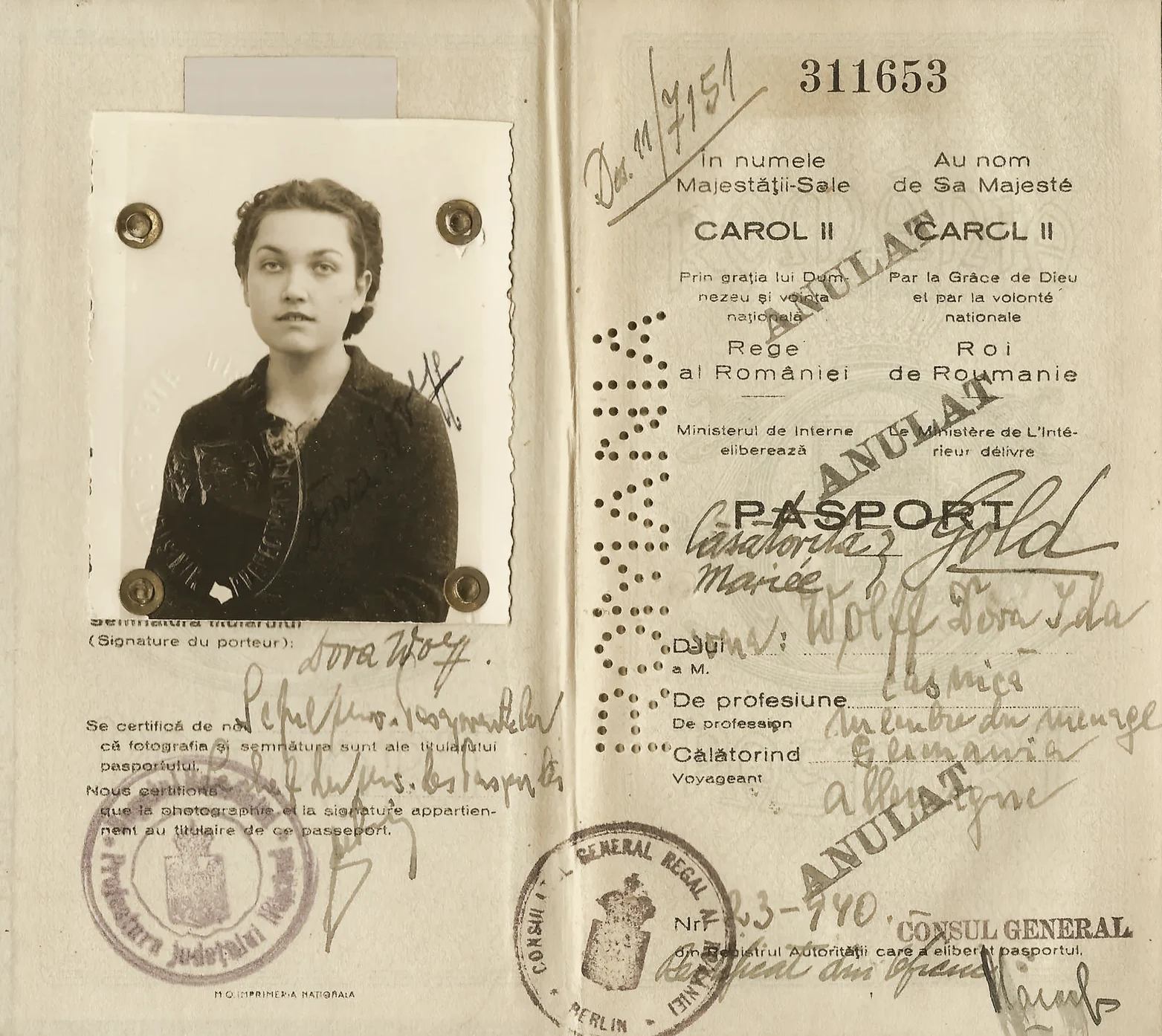
Born 1918–1924. Here the land was already Romanian and the registers were kept in Romanian, but the general citizenship law did not exist yet. The ancestor’s status is therefore proven through the rules that made the population of the new territories Romanian, and through the place where the family was officially registered as living. A Romanian birth record helps, but on its own it is usually not enough.
Born before 1918. For Bessarabia, this means the ancestor was born a subject of the Russian Empire. The 1924 law made Romanian citizens of everyone who had their legal domicile in Bessarabia on 27 March 1918 (Article 56). No application was needed, because citizenship was granted automatically by the law itself.
Born before 1918: what “domicile” means
In this context, domicile is not simply the place where someone lived. It means the place where the person was officially registered under the Russian law in force before 1918, as a member of a particular village or town community. A man could live in Odesa for years while remaining registered in a Bessarabian village, or the other way round, and it was the registration that counted.
For this reason, a certificate saying where your great-grandfather lived does not settle the question on its own. Domicile is proven with records from that period, such as household lists, tax registers and parish books. Finding them takes more archive work than the other two cases, and it is better to do that work before the application is filed than to wait for the authority to ask for it.
The court has confirmed the 1924–1940 presumption
A presumption, in legal terms, is a fact that the court accepts as true unless there is evidence to the contrary. In a case decided on 21 January 2025 (decision No. 353/2025, case No. 22971/3/2024), the Bucharest Tribunal looked at a family whose parents were born in 1933–1935 in the village of Cazaci, Cetatea Albă county, which was then in Romania. The court held that people born on that territory while it was under Romanian sovereignty are presumed to have been Romanian citizens. It also noted that asking for “direct proof” of citizenship from that period is unrealistic, because the records of the time did not state citizenship at all. The decision is final.
It is worth being clear about what this means. The presumption comes from court practice in 2025–2026, not from a rule written into the 1924 law. It gives strong support to families in the 1924–1940 case, but it does not guarantee the outcome of any particular application.
Nationality in the record is not citizenship
Old records often say “Jewish”, “Ukrainian”, “Russian” or “German” next to a name. Interwar Romania was a country of many peoples, and people of all of them could be Romanian citizens. The nationality written in a register describes a person’s ethnic origin. It does not mean that the person was a foreigner, and on its own it does not break the family line.
This is relevant to many Jewish families from Bessarabia and Bukovina, as well as to families of Ukrainian, Russian, German or Bulgarian origin from the same villages.
Grandparent or great-grandparent: how far back it reaches
Romania’s current citizenship law (Law 21/1991) offers two routes for descendants, and the difference between them is how many generations they reach.
- Article 11 covers people who lost Romanian citizenship through no fault of their own, and their descendants up to great-grandchildren. Families from Bessarabia and Northern Bukovina, who lost citizenship when the Soviet Union took the land in 1940, usually belong here.
- Article 10 covers former citizens and their descendants up to grandchildren.
How the two articles differ, and which one fits your family, is explained in Article 10 or Article 11. If the chain of citizenship in your family was never broken, you may already be Romanian; you may already be a Romanian citizen explains when that happens.
Where the chain can break
The presumption helps families whose line of citizenship is continuous. It does not apply if the ancestor formally chose another citizenship. When borders changed, residents of the affected territories could opt for the other state, and this choice was called an option. If an archive holds a signed option for Soviet citizenship, the line under Article 11 is broken at that point.
The 1924 law recognised an option not only when it was made on an official form, but also when it followed from private documents or from facts that clearly showed the person’s choice. For an ancestor born before 1918, it is therefore worth checking the archives before filing, so that the family knows in advance what the records say.
How to check your own case
Start with two facts: the town or village where your grandparent or great-grandparent was born, and the year of birth. These alone usually show which of the three cases applies, just as the village and the year did for David.
Next, gather whatever the family has kept: old certificates, passports, letters with addresses, or even a photograph of a single page. Send it to us, and we will tell you whether the line looks workable, which case it falls into and which documents the claim will need. If records have to be obtained from Moldova, Ukraine or elsewhere, we obtain them for you.
The application itself is filed in person, either in Bucharest or at a Romanian consulate in the country where you live. If you file at a consulate, our lawyer can travel to you with the completed file and handle the filing with you, as described in applying in person. Which documents the file needs and how the case runs from start to filing is set out in Romanian citizenship by descent.
If you would like to understand the check itself first, what an eligibility check examines explains it step by step.
Common questions
- Was Bessarabia part of Romania?
- Yes, between 1918 and 1940. Bessarabia joined Romania on 27 March 1918 and remained part of it until the Soviet Union took the region in June 1940. Today most of its territory is the Republic of Moldova, while its southern part, together with Northern Bukovina, is in Ukraine.
- Can I get Romanian citizenship through my great-grandparents?
- In many families, yes. Article 11 of Romania's citizenship law gives the right to the children, grandchildren and great-grandchildren of former Romanian citizens who lost their citizenship through no fault of their own, and this covers most families from Bessarabia and Northern Bukovina. Which article applies to you depends on where and how your ancestor lost citizenship.
- My grandfather was born in Bessarabia in 1930. Was he a Romanian citizen?
- Very likely. A child born there in 1924–1940 to parents living in Romania was a Romanian citizen by birth, and a birth registered by the Romanian authorities is treated as evidence of that. The Bucharest Tribunal confirmed this presumption in 2025.
- The record says my grandmother was Jewish (or Ukrainian, or Russian). Does that disqualify her?
- No. Interwar Romania was home to many nationalities, and people of all of them could be Romanian citizens. The ethnicity written in a record describes origin rather than citizenship, so on its own it does not break the family line.
- What if my ancestor was born before 1918?
- Then he or she was born a subject of the Russian Empire (in the case of Bessarabia) and became Romanian through the 1924 law, which made Romanian citizens of people whose legal domicile was in Bessarabia on 27 March 1918. This case needs more archive work, because the domicile has to be proven with records from that time.
Find out if your grandparent counts
Send us your grandparent's name, the town and the year of birth, and a photo of any document the family kept. We tell you which of the three cases applies and what the claim needs.
contact@origocitizenship.com · +40 759 128 902