Does Romania allow dual citizenship?
Keeping your US, UK or Israeli passport alongside a Romanian one
Prepared by the lawyers of the practice, which handles citizenship-by-descent cases (Legea 21/1991), including representation before the National Authority for Citizenship and the courts in Bucharest.
Reviewed by the practice's attorney, member of the Bucharest Bar (Baroul București) ·
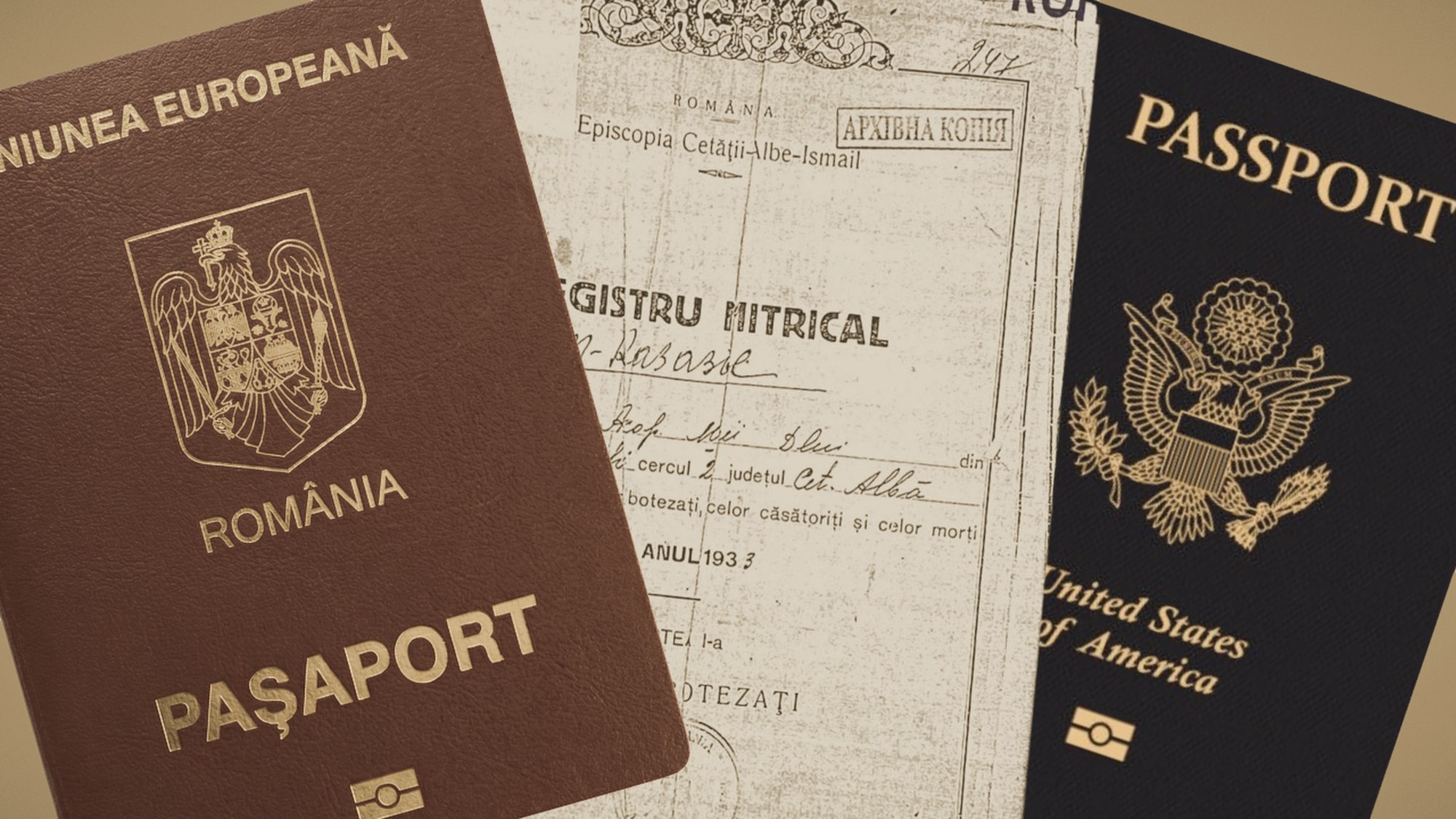
Most people who apply for Romanian citizenship by descent already hold a passport they intend to keep, whether American, British, Canadian, Australian or Israeli. The short answer is that Romania allows this. The rest of this article explains what Romanian law says about it, what the rules of your other country are, and what actually changes in your life once you are a Romanian citizen.
Does Romania allow dual citizenship?
Yes. Romania’s citizenship law, Law 21/1991, grants citizenship by descent “with the keeping of the foreign citizenship” (Article 10) or “with the possibility of keeping the foreign citizenship” (Article 11). In other words, the law itself provides for you to remain a citizen of your current country. You are not asked to renounce anything, and you do not have to move to Romania, because the same articles allow you to keep your home abroad.
Which of the two articles applies to your family depends on how your ancestor lost Romanian citizenship, and is explained in Article 10 or Article 11.
Can I have triple citizenship?
Romanian law sets no limit on the number of citizenships a person may hold. The only renunciation rules in the law concern giving up Romanian citizenship itself, so Romania does not ask you to give up any other. If you already hold two citizenships, whether you can add a third depends on what those two countries allow.
What your other country says
Romania’s rules are only half of the picture, because your other country decides for itself whether you may hold a second citizenship. For the countries most of our clients come from, the position is as follows.
United States. US law does not mention dual nationality and does not require you to choose one citizenship. Acquiring another citizenship costs you US nationality only if you do it voluntarily and with the intention of giving US nationality up. US citizens, including dual nationals, must use a US passport to enter and leave the United States (US Department of State).
United Kingdom. Dual citizenship is allowed, and you do not need to apply for permission to hold it (GOV.UK).
Canada. Canada allows multiple citizenships. You need a Canadian passport to return to Canada by air (Government of Canada).
Australia. Since 4 April 2002, Australians no longer lose their citizenship by acquiring another one. Dual nationals must enter and leave Australia on an Australian passport.
Israel. Israelis who hold another citizenship must enter and leave Israel on their Israeli passport. Members of the Knesset, Israel’s parliament, have to give up any foreign citizenship before taking office.
What changes when you become Romanian
Becoming Romanian brings a few practical consequences, and it is useful to know them in advance.
Military service. There is no obligation. Compulsory military service in Romania has been suspended since 1 January 2007 (Law 395/2005).
Taxes. Romania does not tax people simply for being citizens. What matters is tax residence, meaning the country that treats you as its taxpayer. Under the Fiscal Code (Article 7), you are tax resident in Romania if your domicile is there, if the centre of your vital interests (your family and main economic ties) is there, or if you spend more than 183 days in the country within a 12-month period. If you live in New York or London, becoming Romanian does not by itself make you a Romanian taxpayer.
Entering Romania. Romanian citizens must show a Romanian travel document, such as a passport or identity card, when they return to Romania (Law 248/2005, Article 29). Someone who arrives with only a foreign passport is admitted as a foreigner and asked to clarify their status. Once you have a Romanian passport or ID card, it is therefore simpler to use it whenever you travel to Romania.
Letting the consulate know. A Romanian citizen who lives abroad should inform the nearest Romanian embassy or consulate of that fact (Law 248/2005, Article 5).
What the Romanian passport gives you
A Romanian passport is an EU passport. As a Romanian citizen you are also a citizen of the European Union, with the right to live, work and study in any EU country. This is particularly relevant for British applicants: since Brexit, a UK passport no longer gives those rights, while a Romanian one does. It does not change how you enter the UK, where you continue to use your British passport.
The application itself is filed in person, either in Bucharest or at a Romanian consulate in the country where you live. If you file at a consulate, our lawyer can travel to you with the completed file and handle the filing with you, as described in applying in person.
After approval: oath, certificate, passport
Approval of the application is not yet the moment you become Romanian. Several steps follow, and the first one has a deadline.
- The oath. Your citizenship begins on the day you take the oath of allegiance, a short formal declaration of loyalty to Romania. Since 15 March 2025 you have one year from being notified of the approval to take it (Law 21/1991, Article 20). If the deadline passes without the oath, the approval lapses.
- Where. If you live abroad, you take the oath at the Romanian embassy or consulate in your country, so there is no need to travel to Romania for it.
- The certificate. You then receive a temporary citizenship certificate, followed by a Romanian citizenship card.
- The passport. If you received your citizenship card from 1 September 2024 onward and live abroad, you must apply for a Romanian passport within three years of regaining citizenship (Romanian Ministry of Internal Affairs).
Your children
Children under 18 can be included in your application and become Romanian together with you, without taking the oath themselves. If only one parent applies, the other parent must agree, and a child aged 14 or over must agree too. A child who was not included at the time can be added later through a separate application.
Where to start
For most applicants, keeping their current citizenship turns out to be straightforward, and the question that needs careful attention is whether the family line qualifies. A good place to begin is what an eligibility check examines. Alternatively, send us your ancestor’s name, town and year of birth, and we will tell you where you stand.
Common questions
- Does Romania allow dual citizenship?
- Yes. Under Articles 10 and 11 of Law 21/1991, citizenship by descent is granted with the right to keep your foreign citizenship, so you are not asked to give anything up.
- Can I have triple citizenship with Romania?
- Romanian law sets no limit on how many citizenships you hold. Whether a third citizenship is possible therefore depends on the laws of the other two countries.
- Will I lose my US citizenship if I become Romanian?
- No, not by acquiring another citizenship alone. The US State Department says that US law does not require you to choose, and that losing US nationality requires a voluntary act done with the intention of giving it up. You must still use your US passport to enter and leave the United States.
- Do I have to do military service in Romania?
- No. Compulsory military service in Romania has been suspended since 1 January 2007, and service is now voluntary.
- Will Romania tax me because I am a citizen?
- No. Romania decides tax residence by domicile in Romania, the centre of your vital interests or more than 183 days in the country within 12 months, not by citizenship. The one exception is Romanian citizens working abroad for the Romanian state.
- Can my children get Romanian citizenship with me?
- Yes. Children under 18 can be included in the parent's application and become Romanian together with the parent, without taking the oath themselves. If only one parent applies, the other parent must agree, and children aged 14 or over must agree as well.
Check if you qualify
Send us your ancestor's name, the town and the year of birth, and any documents the family kept. We tell you whether the line qualifies and what the claim needs.
contact@origocitizenship.com · +40 759 128 902